
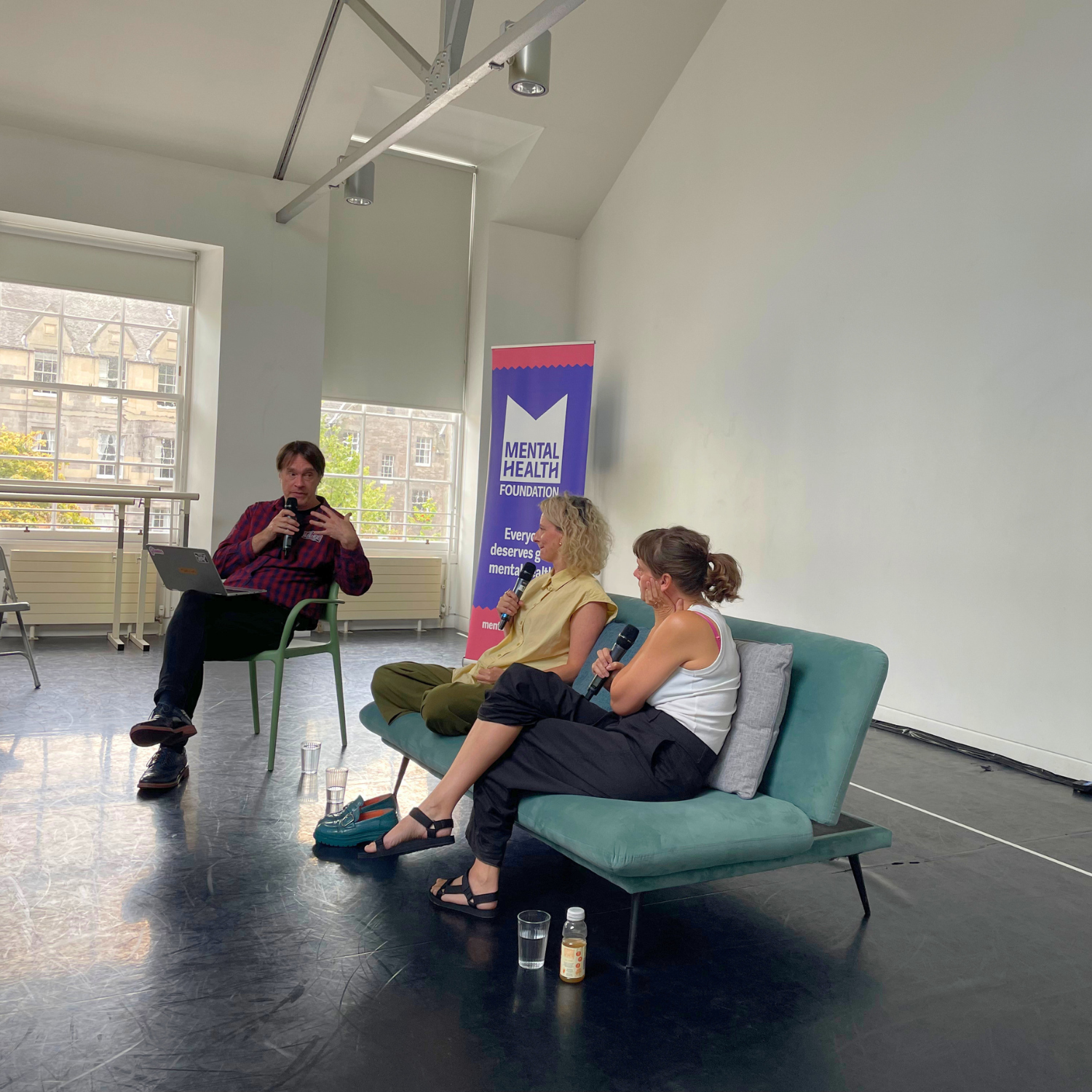
As Edinburgh’s Grassmarket buzzed with festival-goers, shoppers and tourists, Studio 2 at Dance Base offered a moment of quiet reflection right in the beating heart of the Fringe.
Performers, artists, educators and enthusiasts alike gathered for the Mental Health Arts Network event – expertly hosted by Andrew Eaton-Lewis – to hear from award-winning performance artist Bryony Kimmings and comedian Felicity Ward about their experiences of creating bold, thought-provoking work about mental health.
Back in 2015, a shift began at the Edinburgh Fringe as shows focusing on mental health moved into the mainstream media spotlight – shows such as Kimmings’ Fake It ‘Til You Make It (exploring her partner’s clinical depression) and Ward’s 50% More Likely to Die (navigating severe anxiety). Over ten years later, both artists have returned to the Fringe with new work and fresh insights.
For Kimmings and Ward, it’s no longer just about having the conversation, it’s about how to safely hold it. When making and sharing art about lived experience, duty of care is paramount.
Audience members hung on every word as both artists shared their learning around making work about mental health, protecting yourself as a performer and keeping your audience safe.
“Are you ever really ready to perform these shows?”
A show is no substitute for getting the appropriate professional help needed. Both artists stressed the need to be far enough removed from an event before attempting to perform it night after night, especially in an environment as intense as the Edinburgh Fringe. For Kimmings and Ward, therapy and time provided the necessary emotional distance to be able to safely turn their experiences into shareable art.
Discussion turned to the fact that sometimes it’s easier to speak about difficult things to a room full of strangers (or to shout into the social media ‘abyss’) than to open up to loved ones in real life, however Ward reflected that while performing autobiographical work offers personal catharsis, that therapeutic side-effect should represent no more than 15% of your motivation for getting on stage. The remaining 85% must belong to the craft and to the audience.
“You’re trying to show the audience what it was like, not to feel what it was like”
When art touches on themes related to mental health, the performer holds immense responsibility for the psychological safety of the room.
As Felicity commented, “our job is to make people feel safe and to pull them safely out of it.”
Performers need to signal clearly from the outset that they are safe, grounded, and in control of their material and to ensure appropriate trigger warnings are communicated. If the audience feels worried for the performer’s immediate well-being, the artistic boundary breaks down. The performer should act as a mirror so the audience can see themselves and think about their own experiences, rather than absorb trauma from an unsafe performance.
Where possible, having a safe space for audience members to take time out is extremely beneficial and something that both artists feel should be more widely available.
Both performers shared how heartening it is to hear stories of how their shows have resonated with people struggling with similar things and encouraged them to seek the help they needed. For Felicity, “my people became visible”, with more people with similar lived experiences attending her shows, finding it to be a welcoming, safe environment.
“What’s the point of making art if it’s not about being a human being?”
Shame thrives in quiet isolation and breaking the silence surrounding complex struggles – whether postpartum mental health or panic disorders – is an inherently political act.
For Kimmings, making art about the human condition is both vital and inevitable. However, she acknowledges that how she talks about it has changed, having learned the importance of taking care of herself and her wellbeing first and foremost.
While our understanding of a lot of things around art and mental health have improved since 2015, creating genuinely safe creative spaces for both makers and viewers remains an ongoing discipline – one that requires constant reflection, clear boundaries, and deep care.

