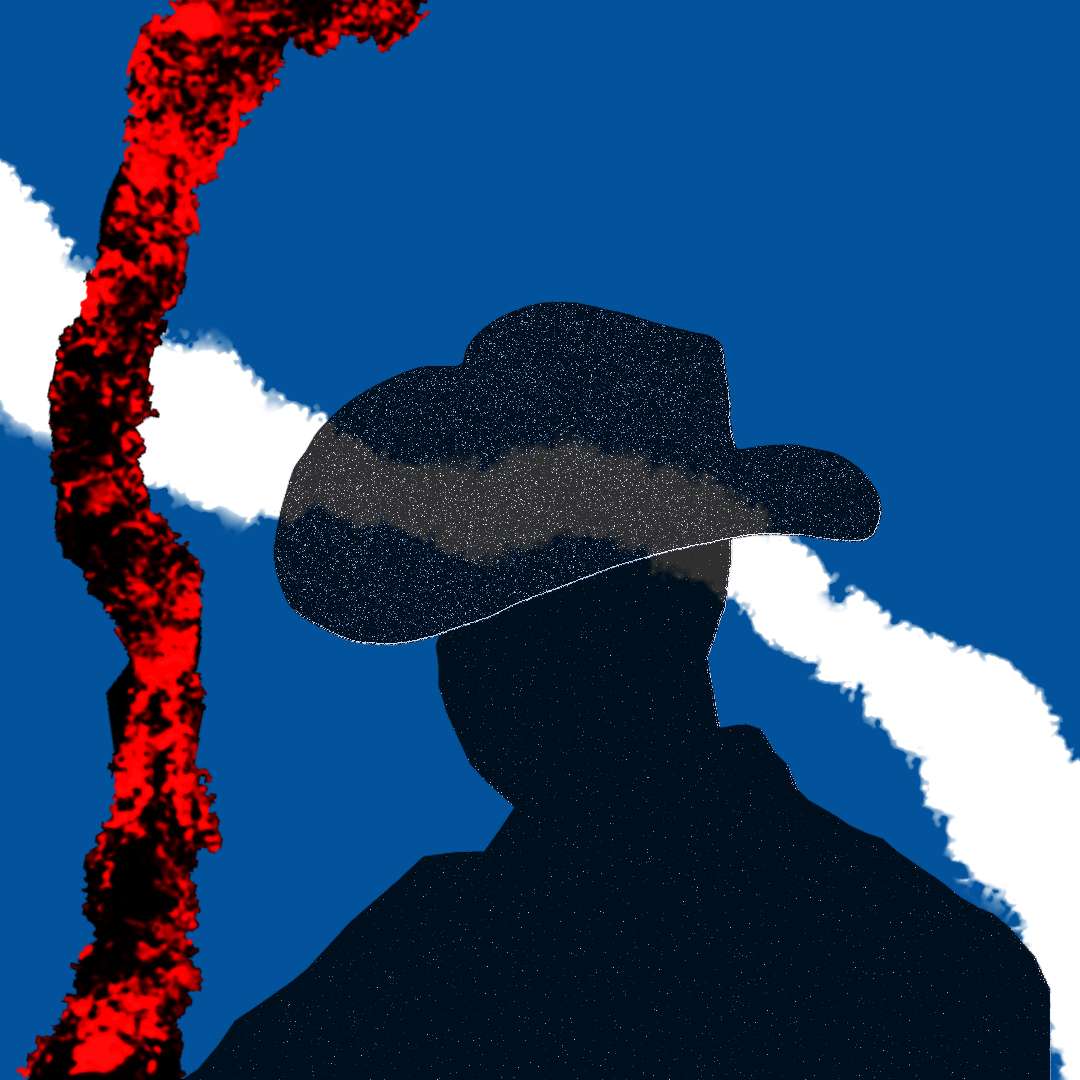
The Rhinestone Cowboy is a darkly humorous, raw, and emotive play that maps a young man’s tumultuous journey from Scotland to Iceland. It comes to Summerhall this week as part of SMHAF’s 2026 programme at the iconic Edinburgh arts venue. Harry (one half of the show’s mother-son writing duo) reflects on how the play came about.
When someone dies, particularly in tragic circumstances, it can be difficult not to let that overshadow the life they lived. Grief naturally draws us towards the loss, but in creating The Rhinestone Cowboy, we wanted to look beyond the tragedy and remember Dan for who he was: his witty, often dark humour, his eccentric personality and the impression he left on the people around him.
The play grew out of our experience of losing Dan, as a way to both process his loss and celebrate the life he lived. What started as a relatively straightforward retelling of his life as a young Scottish man starting a new life in Iceland gradually developed into something much more layered. Through writing, performance, music and visual imagery, we found ourselves revisiting his story from different perspectives, asking questions we hadn’t necessarily considered when we began.
This process has brought us closer to understanding something of what Dan might have experienced. As we explored his life, we began to look more deeply at the realities of living with schizophrenia, the distress of psychotic episodes and the ways someone might struggle to escape their own thoughts. We cannot know exactly what Dan experienced internally, but researching these subjects and working to portray them sensitively has challenged us to look beyond what we could see from the outside. It has also reinforced the importance of understanding the person behind the diagnosis, and the complexity of experiences that others may never fully see.

Reflection has become central to the play in more ways than one. The title The Rhinestone Cowboy, referencing Dan’s favourite song, suggests something of the tension between appearance and reality: the shimmering surface, the different hats we wear, masks we present to the world, and the vulnerability that might lie beneath. To quote a lyric from the song itself,
“A smile can hide all the pain”
We all have ways of presenting ourselves to others, but how well can we ever know what someone else is going through? Looking back at Dan’s life has meant confronting the distance between what we could see and what he might have been experiencing.
For us, the creative process has been a way of processing grief without allowing grief to become the whole story. The tragedy is real, and it is never far from the surface, but so too is the love, the humour and the joy of remembering Dan. We wanted to create something that would allow people who had never met him to come away with a sense of who he was, rather than simply what happened to him. When people tell us they feel they now know Dan, we feel that something of what we set out to do has been successful, like it’s keeping his memory alive.

Sharing such a personal story on stage is not always easy. Revisiting difficult experiences has been emotionally demanding, but it has also given us a sense of purpose, a way to process and explore these experiences honestly.Perhaps that is what Reflections means to us: looking back honestly, recognising how much we may never fully understand, and choosing to remember the person in their entirety. Dan’s story is marked by tragedy, but it is not defined by it. He was here, he made us laugh, and he left his mark on the world.
He’s Dan the Man.